At this year’s HPConnect networking lunch, we were joined virtually by Dr Ken Nowack — licensed psychologist, leading researcher, and founder of Envisia Learning — for a dynamic conversation on the science of behaviour change.
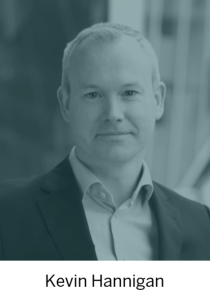
Joining us from the shores of Santa Monica, Ken talked to HPC’s Kevin Hannigan about what truly helps people grow, adapt and sustain new habits in real organisational settings. Ken brought warmth, humour and scientific knowledge to the conversation, offering insights drawn from decades of research, thousands of coaching conversations, and a deep understanding of how people actually change.
Why Starting Is Easy — But Staying the Course Is Hard
Ken opened with an image of a packed beachfront of Santa Monica on New Year’s Day, filled with enthusiastic runners dressed in new training gear and full of resolutions. By March, almost all of them have disappeared. While these bursts of motivation are genuine, they are rarely durable.
The same is true in organisations. Workshops, coaching programmes and training initiatives create a strong starting point — but without deliberate reinforcement, people tend to drift back to familiar behaviours. Ken emphasised that sustaining behaviour change is not about willpower but about designing the right supports, relationships and systems around the individual.
The Three-Part Model: Enlighten, Encourage, Enable
Ken presented a simple, evidence‑based model grounded in 84 theories of behaviour change — distilled into three memorable stages.
- ENLIGHTEN — Creating Insight and Awareness
All change begins with awareness. Without insight or data, people are unable to see what others see, making reflection almost impossible. As a result, nothing changes – we stay the same.
Ken highlighted the role of 360 feedback, assessments, and comparative exercises that ask people to contrast their current state with their ideal future self. This “gap analysis” is powerful because it makes the need for change personal and meaningful. It moves people from vague intention to a clear understanding of where attention and effort are needed.
- ENCOURAGE — Building Motivation That Lasts
Once people understand what needs to change, the next challenge is activating meaningful motivation. Ken noted that while external rewards can help in the short term, lasting behaviour change is nearly always driven by intrinsic motivators — values, personal goals, identity and purpose.
He encouraged practitioners to help clients articulate why a change matters to them personally. When people connect behavioural shifts to their own sense of meaning or aspiration, they are far more likely to commit and follow through, even when the effort becomes challenging.
- ENABLE — The Holy Grail of Sustained Change
Enablement is the stage where most behaviour change efforts falter, and where Ken offered some of his most practical advice. He explained that this stage is about embedding change through structures, routines and relationships that reinforce new behaviours over time.
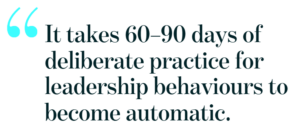
This includes establishing accountability partners who check in regularly, pairing new actions with existing cues using “if‑then” goals (as opposed to SMART goals), and creating social environments where the desired behaviours are modelled and encouraged. Ken emphasised that change is not quick: the neural rewiring required for leadership behaviours takes far longer than most people assume.
He also discussed the importance of aligning behavioural goals with natural energy rhythms — recognising when individuals do their best thinking and ensuring new habits are practised at those times.
When Feedback Works (and When It Doesn’t)
Ken closed by exploring why feedback often fails and how to make it effective. He touched on why it often triggers defensiveness, how cultural and individual differences shape its impact, and what leaders can do to deliver feedback that truly supports change. He commented that “feedback raises anxiety — unless people trust you, they won’t accept the message.”
He shared the contrasting challenges of overestimators, who dismiss feedback due to inflated self‑perception, and underestimators, who fixate on small negatives despite overwhelmingly positive data. Both require tailored approaches grounded in empathy, trust and clarity.
A Final Word on Change & Connection
Ken reminded us that tools and techniques matter, but meaningful behaviour change hinges on human connection. Coaches, leaders and colleagues play a vital role in helping others see themselves clearly and supporting their journey towards stronger, more effective habits. Their role is to be an ally and someone who helps people see the world more accurately.
Dr. Ken Nowack

Ken is a member of Daniel Goleman’s Consortium for Research on Emotional Intelligence in Organizations and served as the Editor-in-Chief for Consulting Psychology Journal. He is the author of a number of validated psychometric tools, has published three books and is a regular speaker at ATD’s annual conference.
If you’d like a deeper dive into Ken’s latest thinking, keep an eye out for his latest book Ouch, That Hurt! Due to be published later this year, it is a practical guide to navigating the messy world of giving and receiving feedback.
Connect with Ken on LinkedIn >>>
Envisia Learning
Through HPC’s unique partnership with Envisia Learning, we utilise a range of unique 360‑degree tools and bespoke assessments to suit your needs. Authored by Dr Ken Nowack, the surveys allow feedback on a range of competencies aligned to the following roles:
/ Executive
/ Senior Manager
/ Middle Manager
/ First Line Manager
/ Specialist Role (no direct reports but significant people dependencies)
The 360 surveys are administered through a bespoke online system which comes with full team tech support.
 distinguish between “intelligent failures” (which drive learning) and avoidable mistakes.

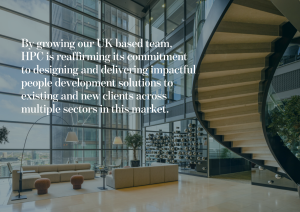 We will also be working more regularly from our new London base in Heron Tower, Bishopsgate. Located on the northeastern corner of the financial hub of the City, its central location allows us to connect with existing and new clients.
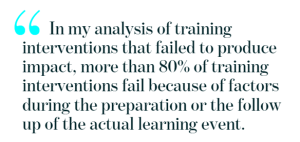 Kevin then asked Robert about what drives learning transfer. In Robert’s view, many factors drive learning transfer, some of which happen before the learning takes place, and some of which take place after the learning. In Robert’s experience, about 80% of the impact of learning depends on these before and after elements. Some specific considerations that Robert highlighted are:
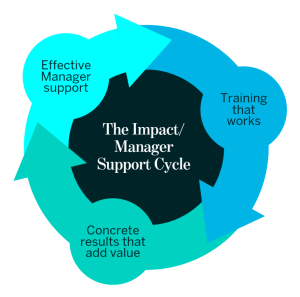 Kevin noted how these elements suggest that the involvement and support of the learner’s line manager is key, and probed Robert a little more on this. Robert emphasised that the manager is key to the learner developing a sense of accountability for applying their learning and that this, in turn, depends on there being a dialogue with the manager before and after the learning. Robert noted how often “most people are held accountable for participating” but that this is not enough for learning to deliver real and consequential value to the organisation.

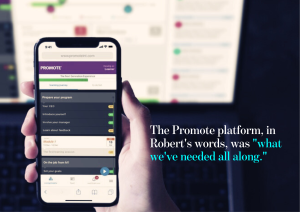 The final part of the discussion explored the value of the Promote platform. HPC uses Promote to facilitate learning transfer for clients and to create a compelling blended experience for programme participants. Since starting to use the platform in 2016, it has supported thousands of learners to continue their learning journey beyond the “classroom”. Kevin first came across the Promote platform when reading a report that Robert had joined the company as an advisor and he was curious as to how Robert had become involved. Robert first encountered the platform after he had retired, noting that for most of his career training was event-focused. Robert knew of the importance of the before and after factors that wrap around a training event, as well as the reliance on managers, all of which was hard to do. The Promote platform, in Robert’s words, was “what we’ve needed all along! When I saw it, I came off the retirement bench to get involved as much as I could in this promising technology!” The platform allows you to manage the before and after factors, giving you control and allowing you to connect with your learners in their workplace. Equally, there is no place to hide for a learner anymore because we can see it and do something about it. With Promote, learners are accountable for doing something useful with their learning.
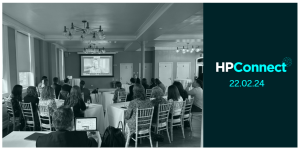 As Kevin and Robert wrapped up their conversation, Robert graciously took two questions from the audience. The first question to Robert was “if he felt that L&D professionals needed to become more sales and marketing-focused to sell the benefits of learning solutions to a business.” Robert emphasised the importance of L&D professionals using data to provide evidence that training pays off, and even to show when learning is not being fully utilised and how a business could get more from it. He used the term “User education” to remind us that learning doesn’t just work magically and that you need to do something with the learning to get value from it. Being able to show a manager what is working, and where there is value not being fully exploited is very impactful. He spoke about a shift in the “user” mindset about learning. Learning is no longer about filling seats but instead is concerned with making sure L&D provides value to our clients. He ended this response by urging L&D professionals to “market the bejesus out of learning to clients”.