Why Adaptability, Growth and Thriving Matter – In a world where change is the only constant, HPC’s Kevin Hannigan believes the organisations that succeed will be those that learn faster, adapt sooner, and prioritise growth.
Automation, AI, and shifting work models are transforming the very fabric of work. The World Economic Forum estimates that nearly 39% of roles will require entirely new skill sets by 2030, while Gallup reports that only a third of employees describe themselves as thriving. These figures underscore the world of work is changing at an unprecedented pace and that there is a potential, amidst all this change, to leave people behind.
Why These Three Skills Matter Now
If we are to deliver on the promise that new technologies provide, we must face the stark reality that success in this era will depend less on static expertise and to a much greater extent on the capacity of our organisations to adapt, grow, and thrive.
Recent practitioner reports echo this urgency. The OLxD 2025 Organisational Learning & Development Report identifies a culture of continuous learning and reskilling as the top priorities for learning professionals. Similarly, LinkedIn’s Workplace Learning Report warns of a looming skills crisis, with almost half of executives concerned that employees lack the capabilities to execute strategy.
For learning leaders, this is a pivotal moment. The question is not whether change will happen—it is how quickly we can equip our people to respond. Given the pace of change, this means reducing the time to competence for critical skills and also ensuring that our people are curious, adaptable and engaged. Organisations that fail to prioritise these traits risk falling behind in an economy where agility is the ultimate competitive advantage.
Adaptability: Building Agility in a World of Constant Change
Adaptability is no longer optional; it is existential.
McKinsey’s research on workforce resilience stresses that leaders must foster environments where employees can pivot quickly, embrace uncertainty, and experiment without fear of failure. Amy Edmondson’s work on psychological safety is also instructive. In Right Kind of Wrong, Edmondson argues that organisations thrive when they 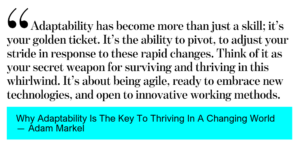 distinguish between “intelligent failures” (which drive learning) and avoidable mistakes.
Adaptability is not just about reacting to disruption; it is about anticipating it. Organisations that invest in adaptive learning strategies will be better positioned to seize opportunities rather than merely survive shocks.
Practical steps for learning leaders:
// Embed lifelong learning as a strategic priority and set engagement in lifelong learning as a core metric
// Encourage leaders to model vulnerability and curiosity, signalling that adaptability is valued
// Use scenario-based learning to prepare teams for ambiguity and rapid change
// Consider introducing “learning sprints” or hackathons to encourage rapid experimentation and cross-functional collaboration
Growth: Cultivating Skills and Mindsets for the Future
Growth is not just about technical upskilling; it’s about nurturing human potential.
Reports from Udemy and CIPD emphasise the rise of human skills such as empathy, problem-solving, and resilience alongside digital fluency. Dan Pink’s insights in Drive remind us that autonomy, mastery, and purpose remain powerful motivators for learning. When employees see a clear link between development and career progression, engagement soars.
Growth is a shared responsibility. Learning leaders must partner with business units to ensure development initiatives align with organisational priorities while empowering individuals to take ownership of their learning journeys.
Practical steps for learning leaders:
// Develop transparent skills frameworks and career pathways to give employees clarity and confidence
// Combine technical training with growth mindset interventions to build confidence and adaptability
// Encourage mentoring and peer learning networks to amplify knowledge sharing and foster a culture of continuous improvement
Thriving: Creating Cultures Where People Flourish
Thriving cultures are built on trust and inclusion.
Thriving goes beyond surviving disruption; it means enabling people to feel energised, connected, and purposeful. Research shows that psychological safety, well-being programmes, and inclusive leadership are key drivers. David Epstein’s Range reinforces the value of broad learning and diverse experiences in fostering creativity and resilience.
When employees feel safe, supported, and valued, they bring their best selves to work—fuelling innovation and long-term success. Organisations should also consider flexible work models and employee voice programmes to strengthen engagement and belonging.
Practical steps for learning leaders:
// Invest in well-being initiatives that address mental health and work-life balance
// Promote cross-disciplinary projects to spark innovation and broaden perspectives
// Recognise and reward behaviours that reflect adaptability and continuous improvement
Looking Ahead: The Role of Learning Leaders
Learning leaders must champion strategies that integrate adaptability, growth, and thriving into organisational DNA. This means moving beyond transactional training to strategic capability building, leveraging AI for personalised learning, and embedding development into the flow of work.
As Amy Edmondson reminds us, “No skill is more important than learning from failure.” In a world where change is the only constant, the organisations that succeed will be those that learn faster, adapt sooner, and prioritise growth.
Kevin Hannigan – HPC

Kevin leads the Learning and Talent Consulting offering and is also CEO at HPC. He works with clients to develop, deliver and evaluate bespoke solutions that drive performance across their business.
He is a highly skilled consultant and facilitator with a wealth of experience in designing the systems and processes that support effective learning, measurement and talent development.
Before joining HPC in 2013, Kevin was head of learning and development for Matheson, Ireland’s largest law firm and for C&C Ireland.
kevin.hannigan@wearehpc.com
Connect with Kevin on LinkedIn >>>
Connect with HPC on LinkedIn >>>